TOP 3 BEST OPENING FOR BLACK AGAINST E4
1. CARO KANN
The Caro-Kann Defense is a chess opening that arises after the moves:
1. e4 c6
2. d4

The Caro-Kann is a solid and somewhat conservative opening for Black, and it is known for creating a sturdy pawn structure. The typical idea is to support the d-pawn with the c-pawn, preparing to challenge White's central pawn on d4. The opening can lead to various pawn structures and plans, making it a flexible choice for players who like positional play.
Here is a brief overview of some common variations within the Caro-Kann:
1. Classical Variation (3. Nc3 dxe4 4. Nxe4): This is a classical setup where Black allows White to occupy the center with pawns and then aims to challenge it.

2. Advance Variation (3. e5): White immediately advances the pawn to e5, trying to gain space and limit Black's counterplay. Black often responds with 3...c5 or 3...Bf5.

3. Two Knights Variation (3. Nc3 dxe4 4. Nxe4 Nf6): Black challenges White's central pawn structure early by initiating a knight exchange on f6.

4. Tartakower (Fantasy) Variation (3. f3): This is a more aggressive line where White immediately supports the e4 pawn with f3. Black can respond with various plans, such as 3...dxe4 or 3...e6.

5. Bronstein-Larsen Variation (3. Nc3 dxe4 4. Nxe4 Nf6 5. Nxf6+ gxf6): Black opts for a pawn structure with doubled pawns on the f-file but gains dynamic piece play.

6. Karpov Variation (3. Nc3 dxe4 4. Nxe4 Nd7): A solid setup where Black delays capturing on e4 and develops the knight to d7.

These are just a few examples, and there are many other lines and subtleties within the Caro-Kann Defense. The choice of variation often depends on a player's style and preferences. Learning the typical plans and ideas in the Caro-Kann can provide a solid foundation for playing this opening effectively.
2. SICILIAN DEFENCE
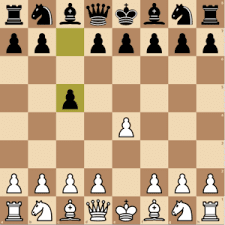
The Sicilian Defense is one of the most popular and dynamic chess openings. It arises after the following moves:
1. e4 c5

By playing 1...c5, Black aims to control the d4 square and create an asymmetrical pawn structure. The Sicilian Defense leads to rich and complex positions, making it a favorite of many aggressive and tactical players. There are numerous variations within the Sicilian Defense, each with its own ideas and characteristics. Here are some of the main variations:
1. Open Sicilian (2. Nf3 followed by 3. d4): This is the most direct way for White to open the center. After 1. e4 c5 2. Nf3, there are various moves for Black, including 2...d6, 2...Nc6, and 2...e6. The Open Sicilian can lead to sharp and tactical battles.

2. Closed Sicilian (2. Nc3): Instead of immediately challenging the center, White develops the knight to c3. The game can transpose into an Open Sicilian or lead to different pawn structures.

3. Dragon Variation (2...d6 3. d4 cxd4 4. Nxd4 Nf6 5. Nc3 g6): Black fianchettos the dark-squared bishop and often looks to create a pawn storm on the kingside.

4. Najdorf Variation (2...d6 3. d4 cxd4 4. Nxd4 Nf6 5. Nc3 a6): Named after the Argentine Grandmaster Miguel Najdorf, this variation is one of the most popular and flexible choices for Black. The move 5...a6 supports the b5 advance and prepares for possible queenside expansion.

5. Accelerated Dragon (1...c5 2. Nf3 Nc6 3. d4 cxd4 4. Nxd4 g6): Black combines the Sicilian Defense with a fianchetto setup, aiming for a more solid and strategic game.

6. Sicilian Sveshnikov (1...c5 2. Nf3 Nc6 3. d4 cxd4 4. Nxd4 Nf6 5. Nc3 e5): Named after the Russian Grandmaster Evgeny Sveshnikov, this variation involves an early pawn advance by Black to e5, leading to complex pawn structures.

These are just a few examples, and there are many more variations and sub-variations within the Sicilian Defense. The Sicilian is known for its rich theory and diverse pawn structures, making it a versatile and popular choice for players of all levels.
3.THE FRENCH DEFENCE
The French Defense is a chess opening that begins with the following moves:
1. e4 e6

By playing 1...e6, Black aims to control the d4 square and create a solid pawn structure. The French Defense often leads to positions with locked pawn structures and strategic maneuvering. Here are some key variations within the French Defense:
1. Classical Variation (2. d4 d5 3. Nc3 Nf6): Black focuses on developing pieces and contesting the center. The move 3...Nf6 is a key idea in this variation.

2. Tarrasch Variation (2. d4 d5 3. Nd2): White aims to control the center with pieces rather than pawns, and Black has various ways to respond, including ...c5 and ...Nf6.

3. Winawer Variation (2. d4 d5 3. Nc3 Bb4): Black pins the c3 knight to the king and can create imbalances in the pawn structure.

4. Advance Variation (2. d4 d5 3. e5): White aims to gain space by advancing the e-pawn. This often leads to a pawn structure where Black has a backward pawn on d7 but can potentially attack on the queenside.

5. Exchange Variation (2. d4 d5 3. exd5): This variation simplifies the position by exchanging pawns early. Black can recapture with either the queen or the knight.

6. King's Indian Attack (2. Nc3): White delays the advance of the d-pawn, allowing for flexible pawn structure and piece development. This setup can transpose into other variations.
The French Defense is known for creating pawn structures with pawn chains, particularly the pawn on d7. This structure can lead to strategic battles where both sides maneuver for advantages. Players who like solid, strategic positions and are comfortable with pawn structures that may limit piece mobility often find the French Defense to be a suitable choice.
As with any opening, understanding the plans and typical pawn structures associated with the French Defense is crucial for successful play.
Comments
Post a Comment